
Paul Thek, Meat Sculpture with Butterflies, 1966, plexiglas on white pedestal, wax and butterflies
Paul Thek, Meat Sculpture with Butterflies, 1966, plexiglas on white pedestal, wax and butterflies

Betty Hahn, American, b. 1940
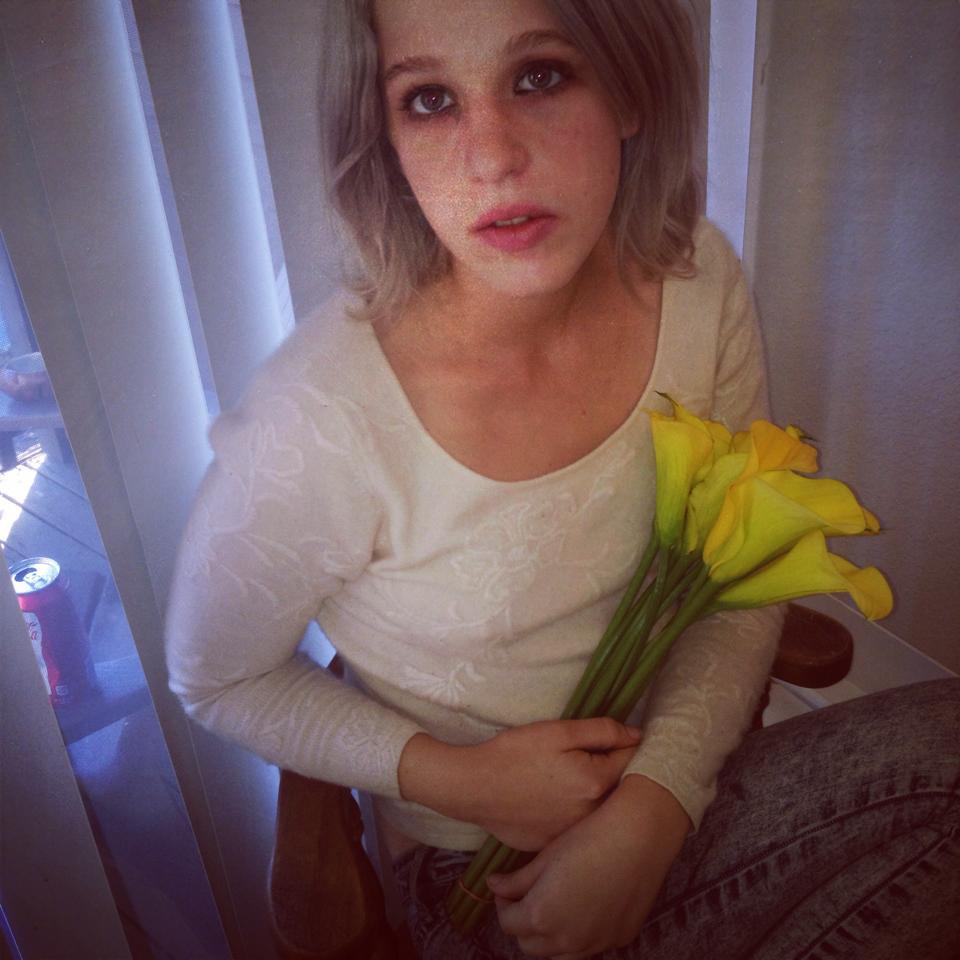
Belladonna, 1980
Internal dye diffusion transfer process print
20 × 24 in. (50.8 × 61 cm)
Collection Museum of Contemporary Art Chicago, Gift of Mr. and Mrs. Myron J. Hokin, 1981.10.3
Photo: Nathan Keay, © MCA Chicago

ARTIST
TITLE
Dagger Child
DATE
MEDIUM
Painted wood
DIMENSIONS
76 1/8 x 5 3/8 x 5 1/8 inches (193.4 x 13.7 x 13 cm)
CREDIT LINE
Solomon R. Guggenheim Museum, New York

Masaccio, The expulsion of Adam and Eve, Brancacci Chapel, before the restoration (left) and after it, now with the giornate (here portions of painted surface corresponding to the successive days of work) more marked.

Anselm Kiefer
The Angel of History

Sam Durant, American, b. 1961
Partially Buried 1960s/70s Dystopia Revealed (Mick Jagger at Altamont) & Utopia Reflected (Wavy Gravy at Woodstock), 1998
Mirrors, dirt, amplified audio system, and audio CD
Two parts, each: 20 × 84 × 40 in. (50.8 × 213.4 × 101.6 cm)
Collection Museum of Contemporary Art Chicago, Partial and promised gift of Rena Conti and Ivan Moskowitz, 2008.37
Photo: Nathan Keay, © MCA Chicago
Doris Salcedo, A Flor de Piel (detail), 2011, Rose petals and thread, 1333.5 x 650 cm, D.Daskalopoulos Collection Installation view: Doris Salcedo, Museum of Contemporary Art Chicago, February 21–May 2
“To create A Flor de Piel, Doris Salcedo sutured together hundreds of rose petals into a delicate shroud that undulates softly on the floor. Suspended in a state of transformation, the petals linger between life and death and are so vulnerable that they tear if touched. For Salcedo, fragility becomes the essence of the work as she sought to create an “image that is immaterial.” The title is a Spanish idiomatic expression used to describe an overt display of emotions. While that meaning is lost when literally translated, the phrase a flor de piel links flowers and skin, suggesting a sensation so overwhelming that it is expressed physically through a coloring of the body’s surface.
Salcedo’s installations and sculptures often employ minimal forms that subtly evoke the fragility of human life. Viewed in light of the brutal civil war in Salcedo’s native Colombia, this aesthetic sensibility takes on specific political resonances. Salcedo conceived the work A Flor de Piel while she was researching the events surrounding a female nurse who was tortured to death in Colombia and whose dismembered body has never been found. The artist has described the work as a floral offering to this victim of torture, as well as all of those who have been affected by violence. “Suturing the petals is very important because it was a way to bring together all these parts,” Salcedo has said. “Violence destroys everything. Torture destroys bodies. The idea is to bring them together and unite them and recover the force that they had.”¹
Lauren Hinkson
1. Doris Salcedo and Tim Marlow, “Doris Salcedo on A Flor De Pieland Plegaria Muda,” White Cube, May 25, 2012, accessed June 6, 2013.

Chris Burden, American, b. 1946
Pick, Bottle and Alcohol, 1979
Pick, glass bottle, sign, and wood and glass vitrine
12 × 22 × 19 in. (30.5 × 55.9 × 48.3 cm)
Collection Museum of Contemporary Art Chicago, Gift of Lannan Foundation, 1997.25.a-e
Photo: Nathan Keay, © MCA Chicago

Damien Hirst, detail from The Martyrdom of Saint Andrew, 2002 – 2003

Anselm Kiefer, Sprache der vögel, 1989
“In ‘Atrabiliarios’ Salcedo evokes absence and loss by using materials and processes that locate memory in the body. The viewer’s response is, in turn, emotional, even visceral, rather than purely intellectual. Niches cut into the plaster wall contain shoes as relics or attributes of lost people, donated by the families of those who have disappeared. Shoes are particularly personal items as they carry the imprint of our body more than any other item of clothing. She then sealed the niches with a membrane of cow bladder, which she literally sutured into the plaster of the wall as if picturing the literal process of internalised bodily memory. Barely visible through the animal skin membrane, the shoes are a haunting evocation of their absent owners and inevitably recall the grizzly souvenirs of Nazi death camps.”
— Art Gallery of New South Wales Contemporary Collection Handbook, 2006
Doris Salcedo,
La Casa Viuda VI (detail), 1995
Wooden doors, steel chair, and bone
Three parts: 74⅞ x 39 x 18½ in. (190.2 x 99.1 x 47 cm); 62⅞ x 47 x 22 in. (159.7 x 119.3 x 55.8 cm); and 62½ x 38 x 18½ in. (158.7 x 96.5 x 46.9 cm)
Collection of the Israel Museum, Jerusalem, gift of Shawn and Peter Leibowitz, New York, to American Friends of the Israel Museum
Photo: D. James Dee
“Salcedo’s interviews with displaced rural Colombian women forced out of their homes in search of safety resulted in the series La Casa Viuda. Doors without buildings, unmoored from their foundations, evoke the loss of home and lack of shelter that these families were forced to endure.The title of the series, roughly translated as “the widowed house,” furthers this sense of loss and disruption to the domestic sphere. Embedded within or joining the pieces of furniture, one finds other material remnants that evoke the human presence: a child’s toy chair, human bone, and articles of clothing. Using a strategy employed throughout her work, Salcedo creates uncanny experiences out of the seemingly familiar. As such, the house is transformed into a space of mourning.”—Chicago Museum of Contemporary Art
 Little Bristling Soul