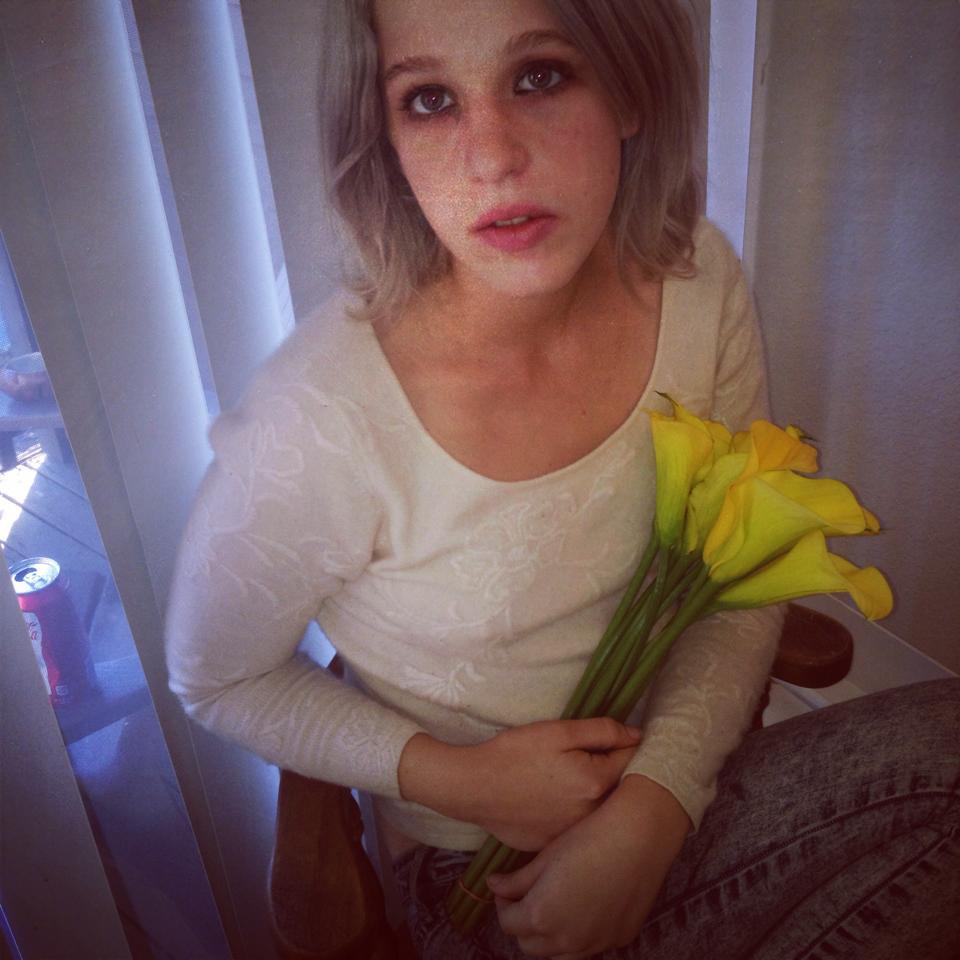
That is my hand on your back
Tag: words
Definitely by Mary Jo Bang
What is desire
But the hardwire argument given
To the mind’s unstoppable mouth.Inside the braincase, it’s I
Want that fills every blank. And then the hand
Reaches for the pleasureThe plastic snake offers. Someone says, Yes,
It will all be fine in some future soon.
Definitely. I’ve conjured a bodyIn the chair before me. Be yourself, I tell it.
Here memory makes you
Unchangeable: that shirt, those summer pants.That beautiful face.
That tragic beautiful mind.
That mind’s ravenous mouthThat told you, This isn’t poison
At all but just what the machine needs. And then,
The mouth closes on its hunger.The heart stops.

Ray Ray, baby dove, Osborn
Hotel Letters
But strangeness
was always a part
of the story.
A rip in the frame, an ink stain
or mar. Always, I was
almost, or maybe.
The endless hope of possibility.
En route to the agency, or the dealer’s
I stopped by Adam’s and begged him.
Please, I said, help me.
You are, he said, the most beautiful.
But, also, stupid, and wild,
part animal. Near the Pacific, after classes,
in the late afternoon.
Without words and filled, entirely
with music. Later, I spent years
looking, but never finding,
what it was he said
was good and worthwhile inside me.
–Cynthia Cruz
When he painted a picture of baby cupid I knew he was just a vessel for your energy to flow through
The truth will always find a way to get you to listen
The Unforgiving Minute
There will be time for apologies. We have the rest of our lives to do this differently. There will be time to reach out to those you may have wronged and say that you were a younger and different person, you are sorry, you didn’t know, you tried not to know, you know now. There will be time to make it right, but it will take precisely that. It will take time.
We want a flavor of equality that none of us have tasted before.
What women like me want in the long term is for you to stop this shit and treat us like people. We want you to accept that you have done bad things, so that in the future you can do better. We want a flavor of equality that none of us have tasted before. We want to share it with you. We want a world where love and violence are not so easily confused. We want a species of sexuality that isn’t a game where we’re the prey to be hung bleeding on your bedroom wall.
Right now, we also want to rage. We are not done describing all the ways this shit isn’t okay and hasn’t been okay for longer than you can believe. We want you to make space for our pain and anger before you start telling us how you’ve suffered, too, no, really you have. We are angry, and we are disappointed.
Because you made everything precious in our lives conditional on not making a fuss.
Because you behaved as if your right never to have to deal with anyone else’s emotions or learn the shape of your own was more important than our very humanity.
Because you made us carry the weight of all the hurt that had ever been done to you, and then you praised us for being so strong.
Because we tried for so long to believe the best of you, because it felt like we had no other option.
I promise you will survive our rage. We have lived in fear of yours for so long.
Morning of buttered toast;
of coffee, sweetened, with milk.Out of the window,
snow-spruces step from their cobwebs.
Flurry of chickadees, feeding then gone.
A single cardinal stipples an empty branch –
one maple leaf lifted back.I turn my blessings like photographs into the light;
over my shoulder the god of Not-Yet looks on:Not-yet-dead, not-yet-lost, not-yet-taken.
Not-yet-shattered, not-yet-sectioned,
not-yet-strewn.Ample litany, sparing nothing I hate or love,
not-yet-silenced, not-yet-fractured, not-yet-Not-yet-not.
I move my ear a little closer to that humming figure,
I ask him only to stay.—Jane Hirshfield, “Not Yet,” in The Lives of the Heart (HarperCollins, 1997)
“The New Hymns”, Timothy Donnelly
They all begin by commanding you to praise
things like sea-thistle, pinecones, a crate of tangerines
stacked into a ziggurat like one you envisionticking under overgrowth, ancient and counting
down deep in the tropics until at last a certain
heavenly alignment triggers doomsday, what then?To think nothing might feel good for a time, the way
walking can, just moving around, turning
right whenever you happen to, heading alongtoward nowhere in particular, getting there almost
without really trying or memory of where
you started out from, much less how you’ll ever get back.I don’t want to have to. I don’t want to have to
locate divinity in a loaf of bread, in a sparkler,
or in the rainlike sound the wind makes throughmulberry trees, not tonight. Listen to them carry on
about gentleness when it’s inconceivable
that any kind or amount of it will ever be able tobalance the scales. I have been held down
by the throat and terrified, numb enough to know.
The temperature at which no bird can thrive —a lifelong feeling that I feel now, remembering
down the highway half-hypnotized in the
backseat feeling what I feel now, and moderatehappiness has nothing to do with it: I want to press
my face against the cold black window until
there is a deity whose only purpose is to stop this.
First Love
by Wislawa Szmborska
translated by Clare Cavanagh and Stanislaw Baranczak)
They say
the first love’s most important.
That’s very romantic,
but not my experience.
Something was and wasn’t there between us,
something went on and went away.
My hands never tremble
when I stumble on silly keepsakes
and a sheaf of letters tied with string
— not even ribbon.
Our only meeting after years:
two chairs chatting
at a chilly table.
Other loves
still breathe deep inside me.
This one’s too short of breath even to sigh.
Yet just exactly as it is,
it does what the others still can’t manage:
unremembered,
not even seen in dreams,
it introduces me to death.

After that hot gospeller has levelled all but the churched sky,
I wrote the tale by tallow of a city’s death by fire;
Under a candle’s eye, that smoked in tears, I
Wanted to tell, in more than wax, of faiths that were snapped like wire.
All day I walked abroad among the rubbled tales,
Shocked at each wall that stood on the street like a liar;
Loud was the bird-rocked sky, and all the clouds were bales
Torn open by looting, and white, in spite of the fire.
By the smoking sea, where Christ walked, I asked, why
Should a man wax tears, when his wooden world fails?
In town, leaves were paper, but the hills were a flock of faiths;
To a boy who walked all day, each leaf was a green breath
Rebuilding a love I thought was dead as nails,
Blessing the death and the baptism by fire.
–Gary Synder
bell hooks, from All About Love
Everyone wants to know more about love. We want to know what it means to love, what we can do in our everyday lives to love and be loved. We want to know how to seduce those among us who remain wedded to lovelessness and open the door to their hearts to let love enter. The strength of our desire does not change the power of our cultural uncertainty. Everywhere we learn that love is important, and yet we are bombarded by its failure. In the realm of the political, among the religious, in our families, and in our romantic lives, we see little indication that love informs decisions, strengthens our understanding of community, or keeps us together. This bleak picture in no way alters the nature of our longing. We still hope that love will prevail. We still believe in love’s promise.
Just as the graffiti proclaimed, our hope lies in the reality that so many of us continue to believe in love’s power. We believe it is important to know love. We believe it is important to search for love’s truths. In an overwhelming number of private conversations and public dialogues, I have given and heard testimony about the mounting lovelessness in our culture and the fear it strikes in everyone’s heart. This despair about love is coupled with a callous cynicism that frowns upon any suggestion that love is as important as work, as crucial to our survival as a nation as the drive to succeed. Awesomely, our nation, like no other in the world, is a culture driven by the quest to love (it’s the theme of our movies, music, literature) even as it offers so little opportunity for us to understand love’s meaning or to know how to realize love in word and deed.
Our nation is equally driven by sexual obsession. There is no aspect of sexuality that is not studied, talked about, or demonstrated. How-to classes exist for every dimension of sexuality, even masturbation. Yet schools for love do not exist. Everyone assumes that we will know how to love instinctively. Despite overwhelming evidence to the contrary, we still accept that the family is the primary school for love. Those of us who do not learn how to love among family are expected to experience love in romantic relationships. However, this love often eludes us. And we spend a lifetime undoing the damage caused by cruelty, neglect, and all manner of lovelessness experienced in our families of origin and in relationships where we simply did not know what to do.
Only love can heal the wounds of the past. However, the intensity of our woundedness often leads to a closing of the heart, making it impossible for us to give or receive the love that is given to us. To open our hearts more fully to love’s power and grace we must dare to acknowledge how little we know of love in both theory and practice. We must face the confusion and disappointment that much of what we were taught about the nature of love makes no sense when applied to daily life.
 Little Bristling Soul