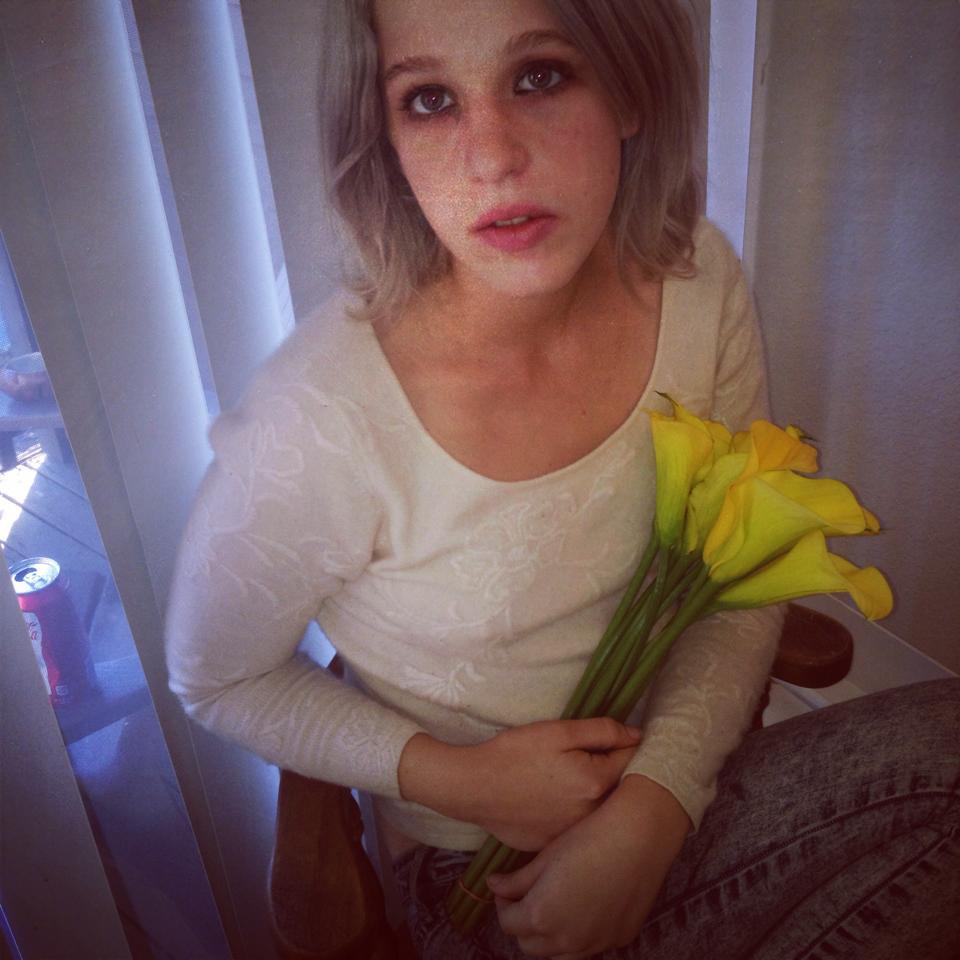

Don DeLillo (full text here)
Don DeLillo (full text here)


tracey emin, curled up asleep can’t think, 2007
“For months after my assault, I had to stop myself before saying (what seemed accurate at the time), ‘I was murdered in France last summer’”
—-Susan J. Brison, Aftermath: Violence and the Remaking of a Self, xii
“I am not the same person who set off, singing, on that sunny Fourth of July in the French countryside. I left her in a rocky creek bed at the bottom of a ravine. I had to in order to survive.”
—ibid, 21
“Although I had been primed, since childhood, for the experience of rape, when I was grabbed from behind and thrown to the ground I initially had no idea what was happening. As I’ve mentioned earlier, I first experienced the assault as a highly unrealistic nightmare from which I tried to wake up.”
—Susan J. Brison, Aftermath: Violence and the Remaking of a Self
“When the inconceivable happens, one starts to doubt even the most mundane, realistic perceptions. Perhaps I’m not really here, I thought, perhaps I did die in that ravine. The line between life and death, once so clear and sustaining, now seemed carelessly drawn and easily erased. For the first several months after my attack, I led a spectral existence, not quite sure whether I had died and the world went on without me, or whether I was alive in a totally alien world. […] I felt as though I’d somehow outlived myself.”
—ibid.: 8–9
the kind of morning where I have listened to this ten times in a row
“I started starving myself, fucked up my bodily health
I didn’t wanna be attractive to nobody else
I didn’t want the appeal, wanted to stunt my own growth
But there’s a fucking reason behind every scar that I show…
My biggest problem was fear, and what being fearful could do
It made me run, it made me hide it made me scared of the truth
I’m not deranged anymore, I’m not the same anymore
I mean I’m sane but I’m insane but not the same as before”


I miss waking up back in the Pacific NW, where each morning I could stroke the soft gold of his hair. His deep, untroubled sleep was brilliant; an alien entity to me. How can he slip back into the comfort of that soft release—pulling me, fidgeting and anxious, back into his arms without ever truly stirring? My main gripe, I suppose, is my incapacity to register wonder in this world, what Nathan called my chronic weariness…But the word “wonder” is no hyperbole for the borrowed realization I found in his arms—that there are bodies in this world so innocent, so undamaged, that they are not yet startled by contact, by affection. There are bodies that still believe that they belong entirely to themselves. I think that’s why I liked walking with him, through the woods and the plains, better than anything. Each step he took was decisive, unburdened, as though he had never doubted the contract between himself and the world. All this to say that I miss him and the dog and the joy he took in simply being, though I railed against him at times, accused him of dwelling in fantasy, of indulging in the luxury of withdrawing from the oppression and pain that others had no choice but to acknowledge. Perhaps some of that sentiment came from a place of actualized politics, but most of it was born of envy and of the fear that accompanies my sense of exile from the bright world he inhabits still. I miss him. I want him to breathe his settled manner back into my mouth.
Trauma is always the story of a wound that cries out, that addresses us in the attempt to tell us of a reality or truth that is not otherwise available.

 Little Bristling Soul