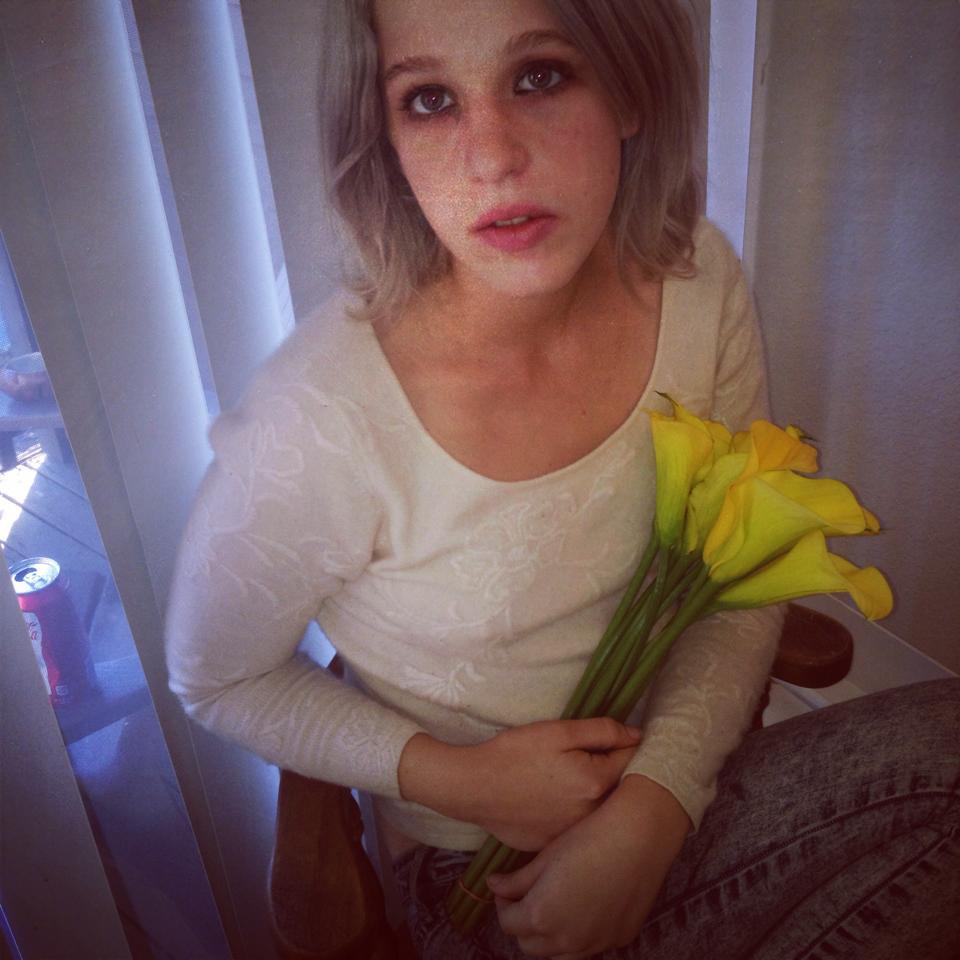

Cassandra Among the Creeps
The problem is no longer getting people to express themselves, but providing little gaps of solitude and silence in which they might eventually find something to say. Repressive forces don’t stop people from expressing themselves, but rather, force them to express themselves. What a relief to have nothing to say, the right to say nothing, because only then is there a chance of framing the rare, or ever rarer, the thing that might be worth saying.

Irma Blank, Silence Story, 1974, P420
“[Blank] has inherited the need to connect art and life from the avant-gardes, and especially the neo-avant-gardes of the mid-20th century. This criterion of measure emerges in Blank’s work since the end of the 1960s, in the form of silent aesthetic dedication. She has made writing the thread around which to develop and convey lengthy experience with a focus on gesture. All of Blank’s work is marked by the dialectic between writing and drawing, writing and painting. Paper, canvas, panel and book are the surfaces on which she creates and structures the relationship between sign and time; ink, ballpoint pen, watercolor, oils and acrylics are the tools Blank chooses to create the body of the work. Though always applying different approaches, the reference to writing and the space of the book is a constant in her creations, starting from the very first series of works; a writing that becomes universal, that is never to be read, but to be observed. Painting becomes reading, writing becomes image. An architecture of the unspoken and the in-between.The protagonist of the exhibition is the series Radical Writings (from the early 1980s to the 1990s) with which Irma Blank makes her sign even more abstract with respect to the previous cycles, clarifying its relationship with time. The long writing-like signs of color (first rose-violet, then blue), applied with a brush on canvas, are linear and uniform. She literally paints “in one breath,” with absolute concentration, without hesitation. Writing is breathing, painting is breathing, working is living. Every trace matches the length of one breath, from left to right, start to finish, emptiness to fullness. A sign in total tension. At the start of the sign the color is more emphatic, fading as the sign gradually extends, generating a shadow zone at the center of the painting that reminds us of the space of a book. Here writing and painting blend in the continuity of a sign-time.”
-exhibition press release

Outsider at the Heart of Things: Essays
by Richard P. Blackmur
How long do we wait before we say
there’s no reply
*
from “Poem for Bill Cassidy” by Heather Christle

chris kraus, i love dick


Three Dialogues
with Samuel Beckett and Georges Duthuit (full text behind link)


Three Dialogues
with Samuel Beckett and Georges Duthuit (full text behind link)


susan sontag

 Little Bristling Soul