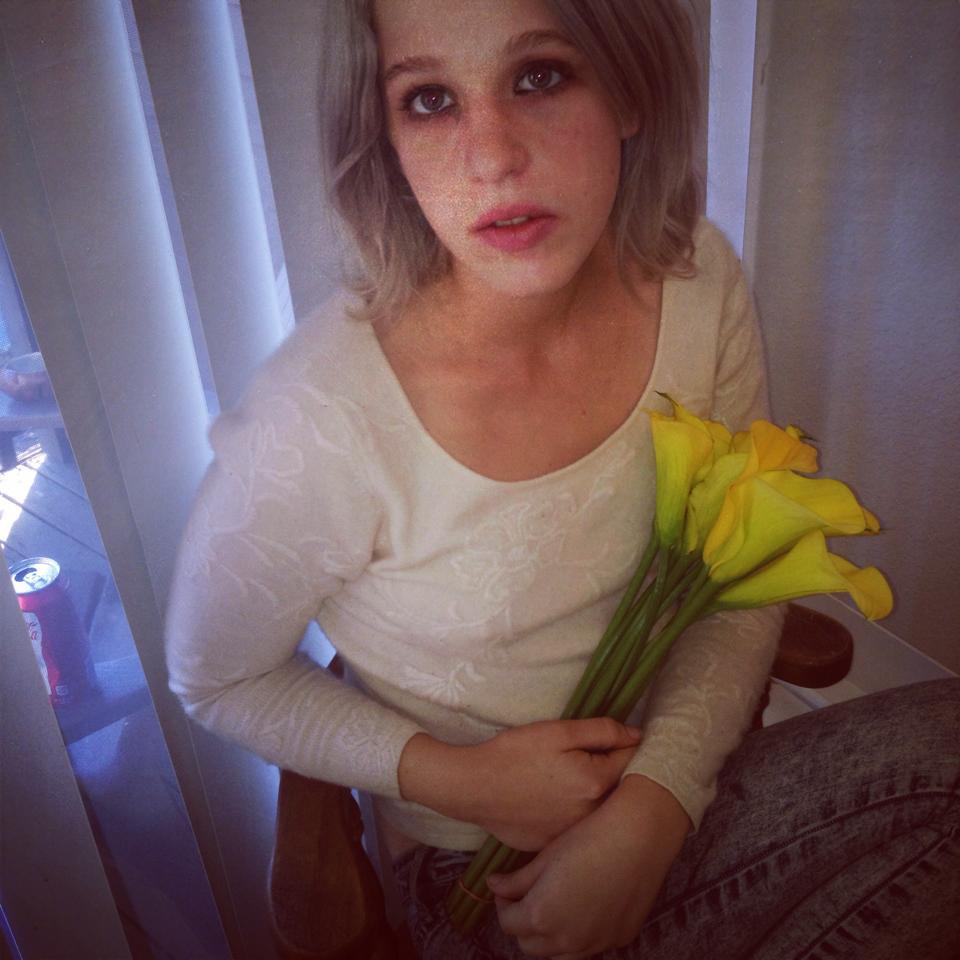

David Moreno
Silence 2012

Virginia Woolf

Mona Hatoum, So Much I Want to Say, 1983, video tape, duration 5 minutes
Blanchot, from “Literature and The Right to Death” (full text here)
Anne Carson, from “Variations on the Right to Remain Silent” by Anne Carson, A Public Space, Issue 7 / 2008 (full text here)
Susan Sontag from “The Aesthetics of Silence”
Rembrandt, Self Portrait with Beret and Turned-Up Collar, 1659
Francis Bacon, Self Portrait, 1973.
Anne Carson, from Nox
Louise Gluck from Proofs & Theories
Anne Carson, from “Variations on the Right to Remain Silent” by Anne Carson, A Public Space, Issue 7 / 2008 (full text here)

Fanny Howe interviewed by Leonard Schwartz, transcribed by Angela Buck
He who lives with untruth lives in spiritual slavery. Freedom is still the bonus we receive for knowing the truth. “Ye shall know the truth,” says Jesus, “and the truth shall set you free.” Now, I’ve chosen to preach about the war in Vietnam because I agree with Dante, that the hottest places in hell are reserved for those who in a period of moral crisis maintain their neutrality. There comes a time when silence becomes betrayal.
The truth of these words is beyond doubt, but the mission to which they call us is a most difficult one. Even when pressed by the demands of inner truth, men do not easily assume the task of opposing their government’s policy, especially in time of war. Nor does the human spirit move without great difficulty against all the apathy of conformist thought within one’s own bosom and in the surrounding world. Moreover, when the issues at hand seem as perplexing, as they often do in the case of this dreadful conflict, we’re always on the verge of being mesmerized by uncertainty. But we must move on. Some of us who have already begun to break the silence of the night have found that the calling to speak is often a vocation of agony. But we must speak. We must speak with all the humility that is appropriate to our limited vision, but we must speak.
xii.
But the silence is certain. This is why I write. I am alone and I write. No, I am not alone. There is someone here who is trembling. […]xv.
The pleasure of losing yourself in the image foreseen. I rose from my body and went out in search of who I am. A pilgrim of my self [or from my self; the Spanish is ambiguous], I have gone to the one who sleeps in the winds of her country.xvi.
My fall that is endless into my fall that is endless, where no one expected me, since when I looked to see who expected me, I saw no other thing than my self.xvii.
Something falling in the silence. My final word was I, but by this I meant the luminous dawn.

from “Variations on the Right to Remain Silent” by Anne Carson
from A Public Space, Issue 7 / 2008
full text here

susan sontag
I hide behind simple things so you’ll find me;
if you don’t find me, you’ll find the things,
you’ll touch what my hand has touched,
our hand-prints will merge.The August moon glitters in the kitchen
like a tin-plated pot (it gets that way because of what I’m saying to you),
it lights up the empty house and the house’s kneeling silence–
always the silence remains kneeling.Every word is a doorway
to a meeting, one often cancelled,
and that’s when a word is true: when it insists on the meeting.
(via nemophilies)


 Little Bristling Soul