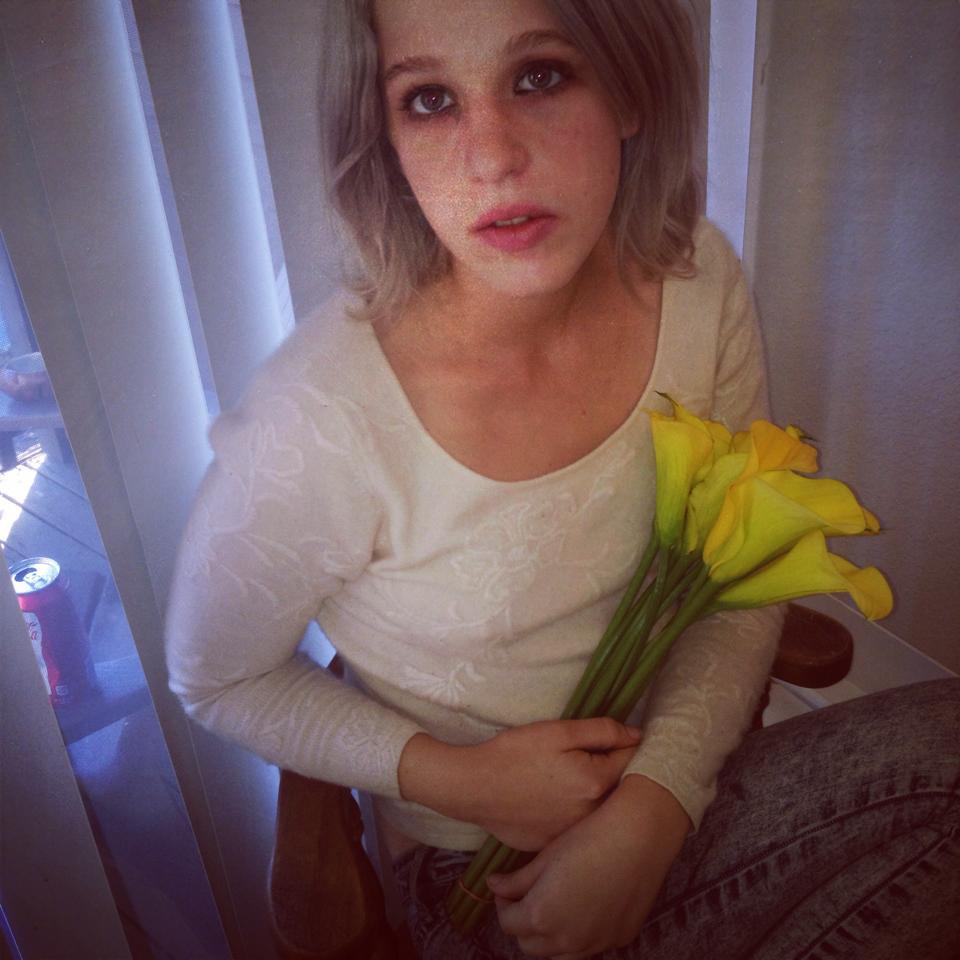
Death, The Last Visit
by Marie HoweHearing a low growl in your throat, you’ll know that it’s started.
It has nothing to ask you. It has only something to say, and
it will speak in your own tongue.Locking its arms around you, it will hold you as long
as you ever wanted.
Only this time it will be long enough. It will not let go.
Burying your face in its dark shoulder, you’ll smell mud and hair
and water.You’ll taste your mother’s sour nipple, your favorite salty cock
and swallow a word you thought you’d spit out once and be done with.
Through half-closed eyes you’ll see that its shadow looks like yours,a perfect fit. You could weep with gratefulness. It will take you
as you like it best, hard and fast as a slap across your face,
or so sweet and slow you’ll scream give it to me give it to me
until it does.Nothing will ever reach this deep. Nothing will ever clench this hard.
At last (the little girls are clapping, shouting) someone has pulled
the drawstring of your gym bag closed enough and tight. At lastsomeone has knotted the lace of your shoe so it won’t ever
come undone.
Even as you turn into it, even as you begin to feel yourself stop,
you’ll whistle with amazement between your residual teeth oh jesusoh sweetheart, oh holy mother, nothing nothing nothing ever felt
this good.
Tag: marie howe
Gretel, from a sudden clearing
No way back then, you remember, we decided,
but forward, deep into a wood
so darkly green, so deafening with birdsong
I stopped my ears.
And that high chime at night,
was it really the stars, or some music
running inside our heads like a dream?
I think we must have been very tired.
I think it must have been a bad broken off
piece at the start that left us so hungry
we turned back to a path that was gone,
and lost each other, looking.
I called your name over and over again,
and still you did not come.
At night, I was afraid of the black dogs
and often I dreamed you next to me,
but even then, you were always turning
down the thick corridor of trees.
In daylight, every tree became you.
And pretending, I kissed my way through
the forest, until I stopped pretending
and stumbled, finally, here.
Here too, there are step-parents, and bread
rising, and so many other people
you may not find me at first. They speak
your name, when I speak it.
But I remember you before you became
a story. Sometimes, I feel a thorn in my foot
when there is no thorn. They tell me,
not unkindly, that I should imagine nothing here.
But I believe you are still alive.
I want to tell you about the size of the witch
and how beautiful she is. I want to tell you
the kitchen knives only look friendly,
they have a life of their own,
and that you shouldn’t be sorry,
not for the bread we ate and thought
we wasted, not for turning back alone,
and that I remember how our shadows walked
always before us, and how that was a clue,
and how there are other clues
that seem like a dream but are not,
and that every day, I am less
and less afraid.
Marie Howe
Slapped the man’s face, then slapped it again,
broke the plate, broke the glass, pushed the cat
from the couch with my feet. Let the baby
cry too long, then shook him,
let the man walk, let the girl down,
wouldn’t talk, then talked too long,
lied when there was no need
and stole what others had, and never
told the secret that kept me apart from them.
Years holding on to a rope
that wasn’t there, always sorry
righteous and wrong. Who would
follow that young woman down the narrow hallway?
Who would call her name until she turns?What I Did Wrong, Marie Howe
Simone Weil says that when you really love you are able to
look at someone you want to eat and not eat them.
Marie Howe, from “After the Movie” (via willnotanswertokate)
—from Marie Howe’s book Magdalene
What the Angels Left
At first, the scissors seemed perfectly harmless.
They lay on the kitchen table in the blue light.Then I began to notice them all over the house,
at night in the pantry, or filling up bowls in the cellarwhere there should have been apples. They appeared under rugs,
lumpy places where one would usually settle before the fire,or suddenly shining in the sink at the bottom of soupy water.
Once, I found a pair in the garden, stuck in turned dirtamong the new bulbs, and one night, under my pillow,
I felt something like a cool long tooth and pulled them outto lie next to me in the dark. Soon after that I began
to collect them, filling boxes, old shopping bags,every suitcase I owned. I grew slightly uncomfortable
when company came. What if someone noticed themwhen looking for forks or replacing dried dishes? I longed
to throw them out, but how could I get rid of somethingthat felt oddly like grace? It occurred to me finally
that I was meant to use them, and I resisted a growing compulsionto cut my hair, although in moments of great distraction,
I thought it was my eyes they wanted, or my soft belly—exhausted, in winter, I laid them out on the lawn.
The snow fell quite as usual, without any apparent hesitationor discomfort. In spring, as expected, they were gone.
In their place, a slight metallic smell, and the dear muddy earth.Marie Howe


Touching the Gobi desert
The Map
by Marie HoweThe failure of love might account for most of the suffering in the world.
The girl was going over her global studies homework
in the air where she drew the map with her finger
touching the Gobi desert,
the Plateau of Tiber in front of her,
and looking through her transparent map backwards
I did suddenly see,
how her left is my right, and for a moment I understood.

 Little Bristling Soul