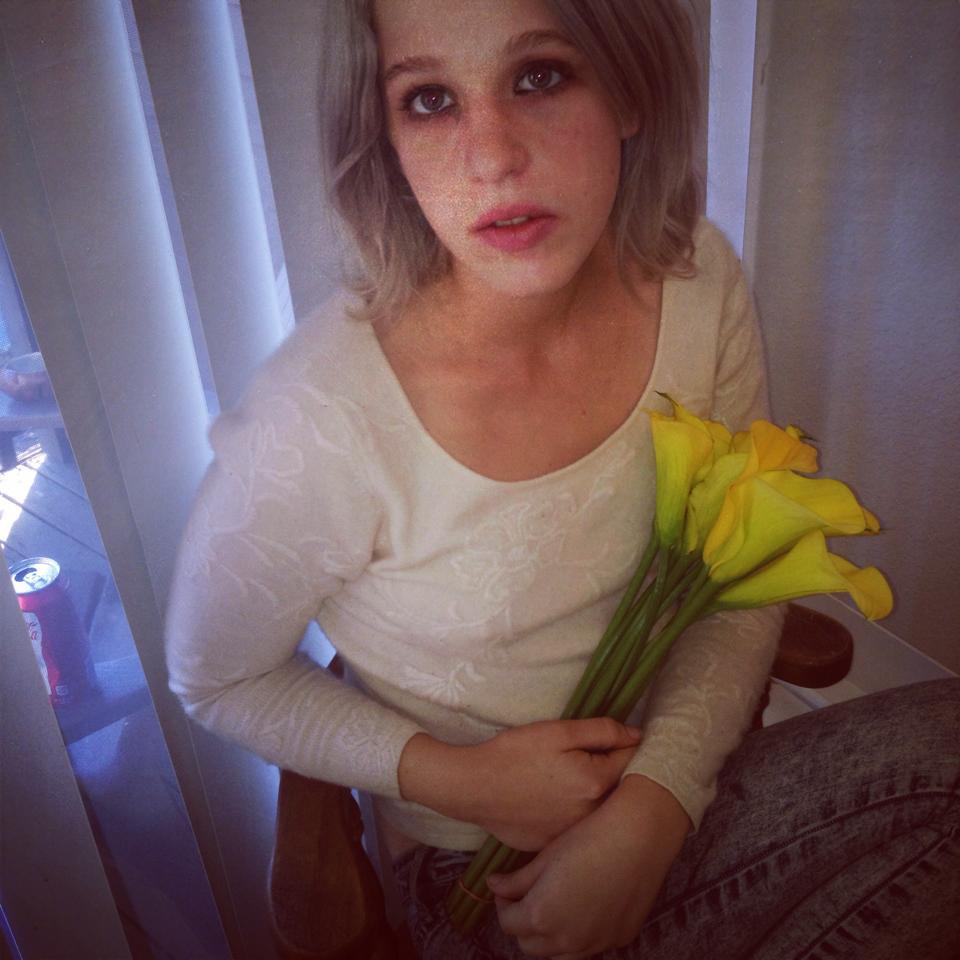
Being girl is a way of being taught what it is to have a body: you are being told; you will receive my advances; you are object; thing, nothing. To become girl is to learn to expect such advances, to modify your behavior in accordance; to become girl as becoming wary of being in public space; becoming wary of being at all. Indeed, if you do not modify your behavior in accordance, if you are not careful and cautious, you can be made responsible for the violence directed toward you (look at what you were drinking, look at what you [were] wearing, look at where you were, look look).

Sara Ahmed, Living a Feminist Life (26)

Writers need to be damned hard to kill. So do women, of course. I have never believed in suicide, the female poet’s alternative to standing her ground and facing down the power of men. I don’t like it that Plath and Sexton wrote strong and beautiful poems capturing the horror and meanness of male dominance but would not risk losing socially conventional femininity by sticking around to fight it out in the realm of politics, including the politics of culture. I always wanted to live. I fought hard to live. This means I did something new. I have been bearing the unbearable, and facing men down, for a long time now.

—-andrea dworkin, life and death

Oppression meant the U. S. in Vietnam, or apartheid in South Africa, or legal segregation in the U. S. Even though I had been tortured and was fighting for my life, I could not see women, or myself as a woman, as having political significance. I did know that the battery was not my fault. I had been told by everyone I asked for help the many times I tried to escape— strangers and friends— that he would not be hitting me if I didn’t like it or want it. I rejected this outright. Even back then, the experience of being battered was recognizably impersonal to me. Maybe I was the only person in the world this had ever happened to, but I knew it had nothing to do with me as an individual. It just never occurred to me that I was being hit because I was a woman.

Andrea Dworkin, from Life and Death 

The feminist is the woman who is there not because she is his woman, but because she is the sister of the woman he is being a weapon against. Feminism exists so that no woman ever has to face her oppressor in a vacuum, alone. It exists to break down the privacy in which men rape, beat, and kill women.

Andrea Dworkin, Life and Death

mississippistreet:

queerfabulousmermaid:

mississippistreet:

– Betty McLellan, Beyond Psychoppression: a feminist alternative therapy, pg. 70

Okay but fuck racist radfem Mary Daly and fuck Betty McLellan because Audre Lorde definitely wrote “The Uses of Anger” circa 1981. And considering that Mary Daly didn’t fuck with Audre Lorde—not since 1979 when lorde wrote a letter critiquing her white supremacist views and behaviors—I am highly suspicious of this clear paraphrasing of Lorde’s argument which according to McLellan’s citation was written in 1984 after Lorde’s essay which was published as early as 1981.
This is the 1981 publication of “the uses of anger” that I found. http://www.jstor.org/stable/40005441
Here’s Audre Lorde’s 1979 essay “An Open Letter to Mary Daly” http://www.historyisaweapon.com/defcon1/lordeopenlettertomarydaly.html
Fuck the historical erasure of queer Black women’s words, ideas, and activism. Fuck that.

thank you for pointing this out.

audre lorde was a lesbian though- she used the words lesbian & dyke-  let’s not say “don’t erase queer black women’s words” when by doing so you are obfuscating and rewriting the very important lesbianism that informed her politics.

What do we do about the batterers? This question is an urgent one. You pull them off of one woman, they find another woman. There
aren’t individual solutions to this problem, although every woman’s life saved is a victory of sorts. What I’m trying to say is that escape is always only partial.

Andrea Dworkin, from Life and Death