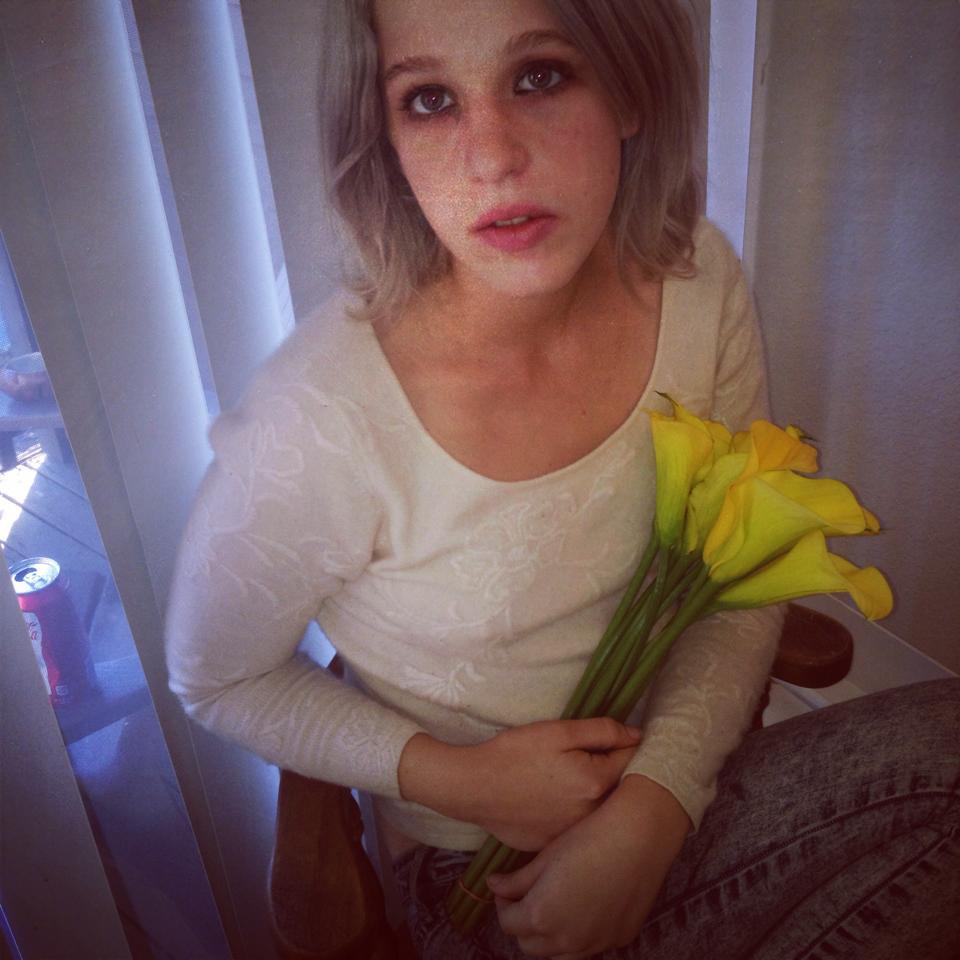

Bhanu Kapil from Ban en Banlieue (Nightboat Books, 2015)
Bhanu Kapil from Ban en Banlieue (Nightboat Books, 2015)

Adam Patterson, Dejected Son (Taken from the series, “Fatherland”), 2013. Photographed by Shannon Smart.

An Exile Dreaming of Saint Adorno
Siah Armajani, United States, 2009
“In this work, Armajani explores exile as a physical, political, and emotional condition. He quotes Alberto Giacometti’s surrealist masterpiece, The Palace at 4 a.m. (1932, pictured below), which resembles a miniature stage on which a mysterious play is being enacted. Similarly, Armajani’s cagelike structure is inhabited by a faceless figure who sleeps at a desk; outside and above, another watches. The two are frozen in this voyeuristic tableau, forever separated by the sculpture’s closed doors and glass walls. Armajani’s title references Theodor Adorno, the German philosopher who fled his native country during the Nazi regime. For him, exile was an ethical choice. As he wrote, “It is part of morality not to be at home in one’s home.” Medium:Glass, laminated maple, wood, paint, Plexiglas, copper, metal, clothing, fabric, plaster”
–Artifizz

Mona Hatoum, ‘Cellules’, 2012-2013, mild steel and blown glass in 8 parts, 170 cm x variable depth and width. © Photo: Florian Kleinefenn. © Courtesy of the artist and Galerie Chantal Crousel, Paris.

Cantor Mircea, Like birds on high-voltage wire , 2009. Spoons in wood and silver, wood, wire, wheat. 300 x185 x 100 cm.

Rebecca Horn
Tower of the Nameless
1994
Ladders, violins, motors, electronic components
Private Collection, Vienna, Austria
“The breakup of Yugoslavia and the resulting Bosnian War led to the displacement of a massive quantity of people. Many refugees fled into Vienna, and soon the underground was filled with listless wanderers who did not speak German or have any semblance of a home to return to. With no identity, grasp of the language, or place to stay, music become the refugees’ only way to express their shared sorrow. Horn created this piece in hopes of offering stability to a nameless and lost people. The sculpture is composed of several ladders extending from the ground and up to a very high window, adorned with nine mechanical violins that play a single, mournful note on their own. It is as if they sing of some kind of bittersweet hope of what might lie at the top of the ladder and out into the sun. The melancholy humming of the violins has been known to inspire buskers to improvise along with them”

 Little Bristling Soul