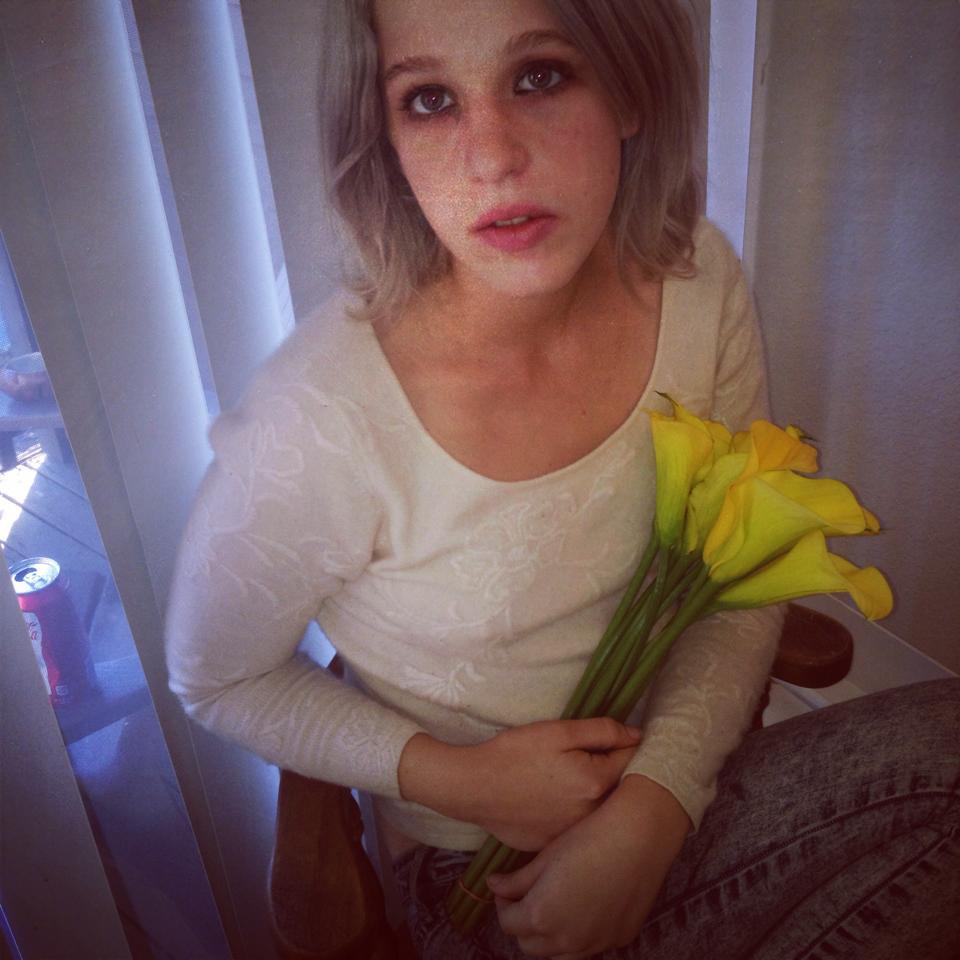

Boat Burial, Aaron Angell, 2013

Mona Hatoum
Untitled (willow cage), 2002
artist’s proof #2 of 2 from an edition of 6
willow, 148 x 28 x 25 cm
Courtesy of Jay Jopling/White Cube (London)

Cube (9 x 9 x 9), 2008
Mona Hatoum
Black finished steel
“Everything about this sculpture, from its imposing physical presence to its construction of barbed wire, seems to be threatening and dangerous. Mona Hatoum’s use of a provocative material reflects her belief that content should be conveyed through aesthetic and formal elements. She describes her work as being ‘…about presenting the audience with a set of objects and materials that may have certain associations and may bring out general feelings of discomfort or uncertainty, and this will be different for each person.’”

An Exile Dreaming of Saint Adorno
Siah Armajani, United States, 2009
“In this work, Armajani explores exile as a physical, political, and emotional condition. He quotes Alberto Giacometti’s surrealist masterpiece, The Palace at 4 a.m. (1932, pictured below), which resembles a miniature stage on which a mysterious play is being enacted. Similarly, Armajani’s cagelike structure is inhabited by a faceless figure who sleeps at a desk; outside and above, another watches. The two are frozen in this voyeuristic tableau, forever separated by the sculpture’s closed doors and glass walls. Armajani’s title references Theodor Adorno, the German philosopher who fled his native country during the Nazi regime. For him, exile was an ethical choice. As he wrote, “It is part of morality not to be at home in one’s home.” Medium:Glass, laminated maple, wood, paint, Plexiglas, copper, metal, clothing, fabric, plaster”
–Artifizz

Mona Hatoum, ‘Cellules’, 2012-2013, mild steel and blown glass in 8 parts, 170 cm x variable depth and width. © Photo: Florian Kleinefenn. © Courtesy of the artist and Galerie Chantal Crousel, Paris.

Aspirational Foreclosure (Matthew / Mortgage Loan Officer) and Thank you for your years of service (Joann / Lawyer), 2016
Installation
3D-printed plaster, ink-jet ink, cyanoacrylate, foam, and polyethylene bags.
47 Canal
Installation view of Josh Kline’s show “Unemployment
Aspirational Foreclosure (Matthew / Mortgage Loan Officer), left, and Thank you for your years of service (Joann / Lawyer), right, both 2016

Damien Hirst
A Thousand Years
1990
2075 x 4000 x 2150 mm | 81.7 x 157.5 x 84.7 in
Glass, steel, silicone rubber, painted MDF, Insect-O-Cutor, cow’s head, blood, flies, maggots, metal dishes, cotton wool, sugar and water

Neither
2004
193 12/16 x 290 3/16 x 588 4/16 in. (494 x 740 x 1500 cm)
Plasterboard and steel
“Doris Salcedo Neither10 September – 17 October 2004Hoxton SquareFor her exhibition at White Cube Hoxton Square Colombian artist Doris Salcedo presented Neither, a new large-scale work. The artist made a charged and discrete installation, a complete re-working of the building’s interior walls. On closer inspection, it became clear that there were new ‘walls’ inside the gallery, which had been marked and textured by wire fencing pressed at various levels into their dry surface. The physical effect was one of disturbing ambiguity between something welcoming (the safe haven of four walls) and something imposing, operating in the space between notions of architectural protection and spatial demarcation.Making spatial coordinates unfamiliar is a function of much of Salcedo’s work, an artist who is known for her poetic sculptures that often incorporate domestic wooden furniture such as chairs, chests, wardrobes or beds to make felt a sense of tragedy or profound emotional unease. These works lay evidence to lives that have been erased as if the living, breathing forms that once used the furniture have been submerged within their own support structure. In 2002, Salcedo made an epic work entitled Noviembre 6 y 7, a commemoration of the 17th anniversary of the violent seizing of the supreme court in Bogotá on the 6th and 7th of November 1985. Salcedo sited the work in the new Palace of Justice, where over the course of 48 hours (the duration of the battle) wooden chairs were slowly lowered over the façade of the building. The work functioned as ‘an act of memory’, a way of inhabiting the space of forgetting.In 2003, for the 8th Istanbul Biennale, Salcedo made a large-scale installation that consisted of 1,600 wooden chairs stacked together in the space between two buildings on a busy, commercial side street in the centre of the city. The chairs were stacked at varying angles yet they created a mass with a completely flat surface. The space occupied by this installation became both saturated and empty; the flatness of the surface lent emphasis to the details. For Salcedo, the work was a topography of war, motivated by historical events in Turkey.Salcedo’s work could point to a kind of mental archaeology since all of her materials are charged with significance and transfused with the meanings that they have accumulated in everyday life. Neither has a choreographed tension that is experienced slowly, through the viewer’s visual appraisal of its rich surface detail.Salcedo’s work is, in part, influenced by her readings of philosophy (in particular, the writings of Emmanuel Levinas) and literature (especially the poetry of Paul Celan), as well as by the ‘social’ sculpture of Joseph Beuys. Neither also refers in part to an opera by American avant-garde composer Morton Feldman from 1977, which incorporates a libretto written by Samuel Beckett, whose sparse, nihilistic poetry conveys the weight of human existence. On a symbolic level, Neither is paradoxical since it renders its materials reliant on each other while at the same time, wresting them of their function. Devoid of objects, its subject is the gallery space itself, removed and re-created to constitute what Salcedo has described as an ‘image of emptiness, a lack and opacity’.“
—White Cube

Jana Sterbak
Kooi
Lydia Schouten, 1978, 17’41’’
For this live performance, Schouten has shut herself in an iron cage of about two by two metres. Coloured crayons and chalks are attached to the bars of the cage, at equal distances from each other. Schouten is dressed in a tight-fitting white ballet outfit, which she rubs against the bars to colour herself.
In the documentary De vernietiging van het valse vrouwbeeld/The destruction of the false female image (1978), Schouten tells us that she used the performance Cage to make a comparison with those women who, at that time, were stuck inside their homes, spending all their time running their households and looking after husband and children. It was not that they did not want to get out into the outside world, but they did not know how. When they eventually vetured out, female participation in a male-dominated society turned out to be impossible. Bearing this in mind, we see how the performance runs parallel to the experience of these women.
Initially Schouten moves about the cage in a composed and self-conscious manner. Her movements are elegant and controlled. This refers to the women who were content with their role in the home, because that was all they knew. During the course of time, woman began to feel more and more closed in and stifled by their four walls, while at the same time there was growing excitement about the idea of getting out. They were literally and figuratively preparing to start exploring the outside world. At this stage, Schouten is moving faster and more wildly about the cage, looking for a way to escape. Meanwhile, the colours are spreading over her clothing and body. After the fiasco, the frustrations strike home. The women have found out for themselves that home was the only place for them. The question of whether this will ever change causes a panic. After running around the cage like a desperate maniac, Schouten collapses in the middle of the cage, totally disillusioned.
(Esther Kunkels)

Louise Bourgeois, Cell XXIV (Portrait), 2001, steel, stainless steel, glass, wood and fabric
‘Tropical Rain Forest Preserves’ (1989, remade 2003) by Mark Dion & William Schefferine.
 Little Bristling Soul