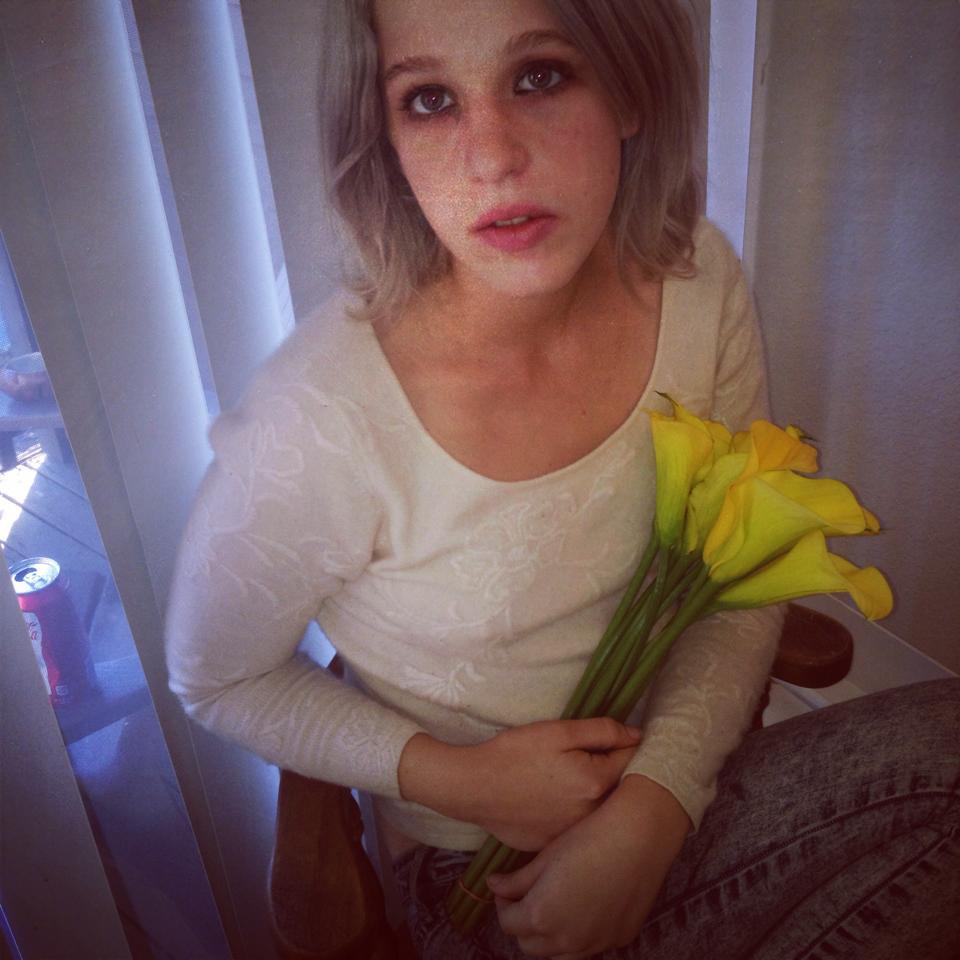
Late Night
Late night and rain wakes me, a downpour,
wind thrashing in the leaves, huge
ears, huge feathers,
like some chased animal, a giant
dog or wild boar. Thunder & shivering
windows; from the tin roof
the rush of water.
I lie askew under the net,
tangled in damp cloth, salt in my hair.
When this clears there will be fireflies
& stars, brighter than anywhere,
which I could contemplate at times
of panic. Lightyears, think of it.
Screw poetry, it’s you I want,
your taste, rain
on you, mouth on your skin.Margaret Atwood
Tag: desire

Ray Osborn from Woad

Kathy Acker | The Birth of the Poet | Hannibal Lecter, My Father

Revisiting a beloved poem by a beloved poet, whom I’m going to miss very much. Rest in peace, Derek Walcott.
LYN HEJINIAN
Yet we insist that life is full of happy chance
The windows were open and the morning air was, by the smell of lilac and some darker flowering shrub, filled with the brown and chirping trills of birds. As they are if you could have nothing but quiet and shouting. Arts, also, are links. I picture an idea at the moment I come to it, our collision. Once, for a time, anyone might have been luck’s child. Even rain didn’t spoil the barbecue, in the backyard behind a polished traffic, through a landscape, along a shore. Freedom then, liberation later. She came to babysit for us in those troubled years directly from the riots, and she said that she dreamed of the day when she would gun down everyone in the financial district. That single telephone is only one hair on the brontosaurus. The coffee drinkers answered ecstatically. If your dog stays out of the room, you get the fleas. In the lull, activity drops. I’m seldom in my dreams without my children. My daughter told me that at some time in school she had learned to think of a poet as a person seated on an iceberg and melting through it. It is a poetry of certainty. In the distance, down the street, the practicing soprano belts the breeze. As for we who “love to be astonished,” money makes money, luck makes luck. Moves forward, drives on. Class background is not landscape—still here and there in 1969 I could feel the scope of collectivity. It was the present time for a little while, and not so new as we thought then, the present always after war. Ever since it has been hard for me to share my time. The yellow of that sad room was again the yellow of naps, where she waited, restless, faithless, for more days. They say that the alternative for the bourgeoisie was gullibility. Call it water and dogs. Reason looks for two, then arranges it from there. But can one imagine a madman in love. Goodbye; enough that was good. There was a pause, a rose, something on paper. I may balk but I won’t recede. Because desire is always embarrassing. At the beach, with a fresh flush. The child looks out. The berries are kept in the brambles, on wires on reserve for the birds. At a distance, the sun is small. There was no proper Christmas after he died. That triumphant blizzard had brought the city to its knees. I am a stranger to the little girl I was, and more—more strange. But many facts about a life should be left out, they are easily replaced. One sits in a cloven space. Patterns promote an outward likeness, between little white silences. The big trees catch all the moisture from what seems like a dry night. Reflections don’t make shade, but shadows are, and do. In order to understand the nature of the collision, one must know something of the nature of the motions involved—that is, a history. He looked at me and smiled and did not look away, and thus a friendship became erotic. Luck was rid of its clover.
(1987)

Robert Hass
Lynda Benglis, FORCED BUNCH, 1983. Glazed ceramic

Lucie Brock-Broido from The Master Letters

Jenny Holzer, The Ambiguities of My Desires
Alice Notley | Songs for the Unborn Second Baby
Medea | Seneca: Six Tragedies | Translated with an Introduction and Notes by Emily Wilson
Alice Notley | Songs for the Unborn Second Baby

 Little Bristling Soul