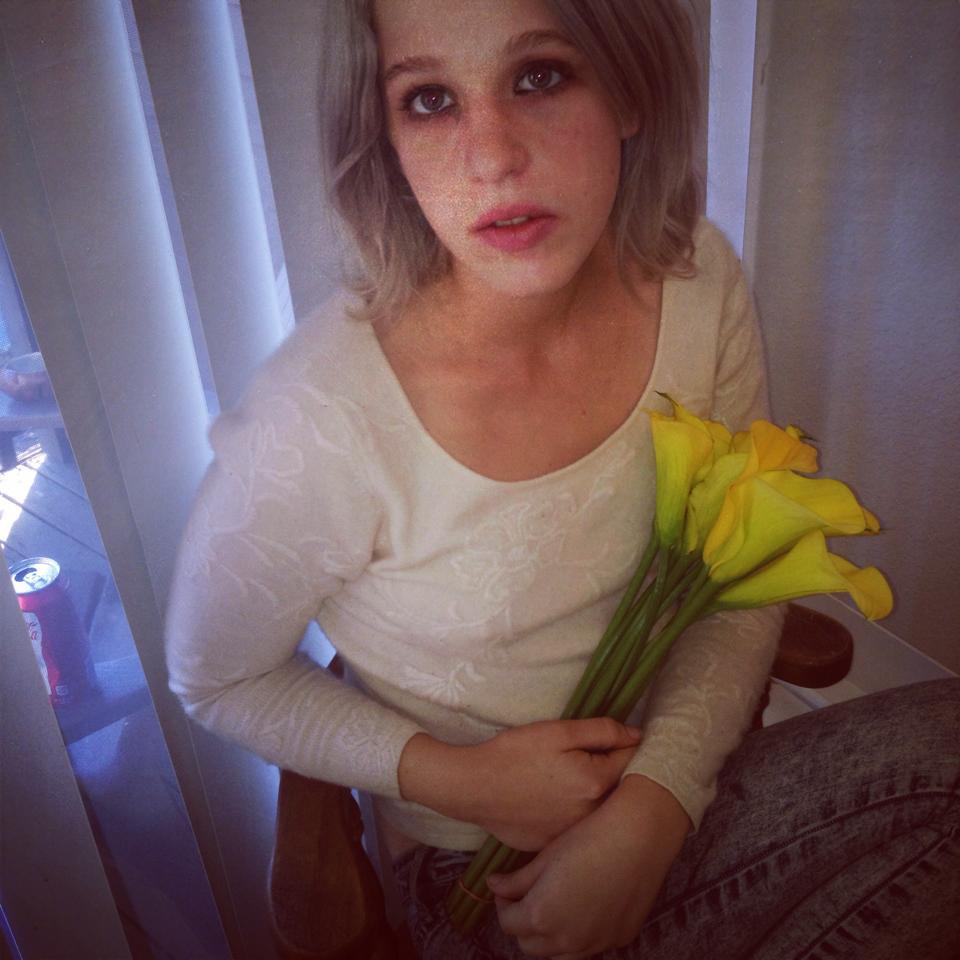

Wolfgang Tillmans
Untitled (La Gomera), 1997.

“Untitled” (Sand), 1993-94, Félix González-Torres

Robert Smithson, Mirror and Crushed Shells 1969
On July 9, 1969, Robert Smithson wrote the following letter to Andy Warhol about “A Mirror and Crushed Shells”:
Dear Andy,
This is to certify that A Mirror with Crushed Shells (Sanibel Island) is an original work of art. It consists of three mirrors which may be restored if broken, and one burlap bag of crushed shells collected by the artist at Sanibel Island, April, 1969. If any shells are ever lost, the owner has the right to restore the work by collecting more shells from Sanibel Island (northern part of islansd; see map of site which is part of the work). The three mirrors are held in place in a corner by the pressure of the shells only. (See photo). The work is owned by Andy Warhol.
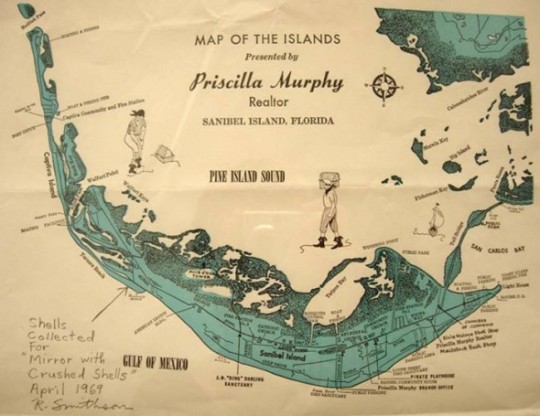
Robert Smithson, Detail of Mirror and Crushed Shells showing map of Sanibel Island, Florida

Janine Antoni and Paul Ramirez Jonas, Migration, 2002, channel video playing on two monitors side by side, 58:03 minute loopDimensions variable

Tracey Emin, still images from “Emin and Emin in Cyprus”, 1996

Geoffrey Hendricks, from Between Two Points, Meditative Rituals
Verona, Italy: Francesco Conz, 1974-1976
56 x 67 x 13 cm.
Edition of 15 signed and numbered copies
A wooden box containing a folder, fabric covered boxes (containing photographic documentation of performances), and ten numbered relics. The work documents ritualistic performances in Norway and Italy in 1974
Tracey Emin (b. 1963), Homage to Edvard Munch and All My Dead Children, original note: signed and dated ‘Tracey Emin 29/3/05’ (lower right), video: signed, titled, inscribed and dated ‘Homage to Edvard Munch and All My Dead Children (LOOP) 5/09/98 DUR 29’00" Beta SP/NTSC Tracey Emin’ (on the cover); signed ‘Tracey Emin’ (on a printed label affixed to the tape)
(i) inkjet print with filmstill and handwritten description of the project
(ii) Beta video tape with original drawing on the cover
(i) 8 1/8 x 11¾in. (20.6 x 29.8cm.)

Ernesto Neto, Polyp, 1990
According to Miguel A. López, author of the text—included in the exhibition catalog—Lo Mejor Está por Venir… (The Best is Yet to Come…): “The sculptures by Neto are explicit invitations to burst into the experiences of our bodies, to surrender to the sensorial pleasures and to become several times something different than ourselves. Undoubtedly, his pieces are just the initial detonator. Then is up to the viewer to give in the pure variations offered and to invent other ways of irremediably becoming that otherness all the time… The work by Ernesto Neto can be approached as a laboratory of mutating bodies and spaces. Beyond the smoothness, translucency, and the more relevant ludic and sensorial aspects of his sculptures, in a broader sense his work represents a continuous challenge to the standards of corporality.”


 Little Bristling Soul